

Changing Behaviors will help your organization with retention, productivity, and engagement by:
Using the Enneagram to enhance leadership and individual self-awareness, and to elevate team engagement and productivity.
Guiding Gen Z and Organizations towards Mutual Success.
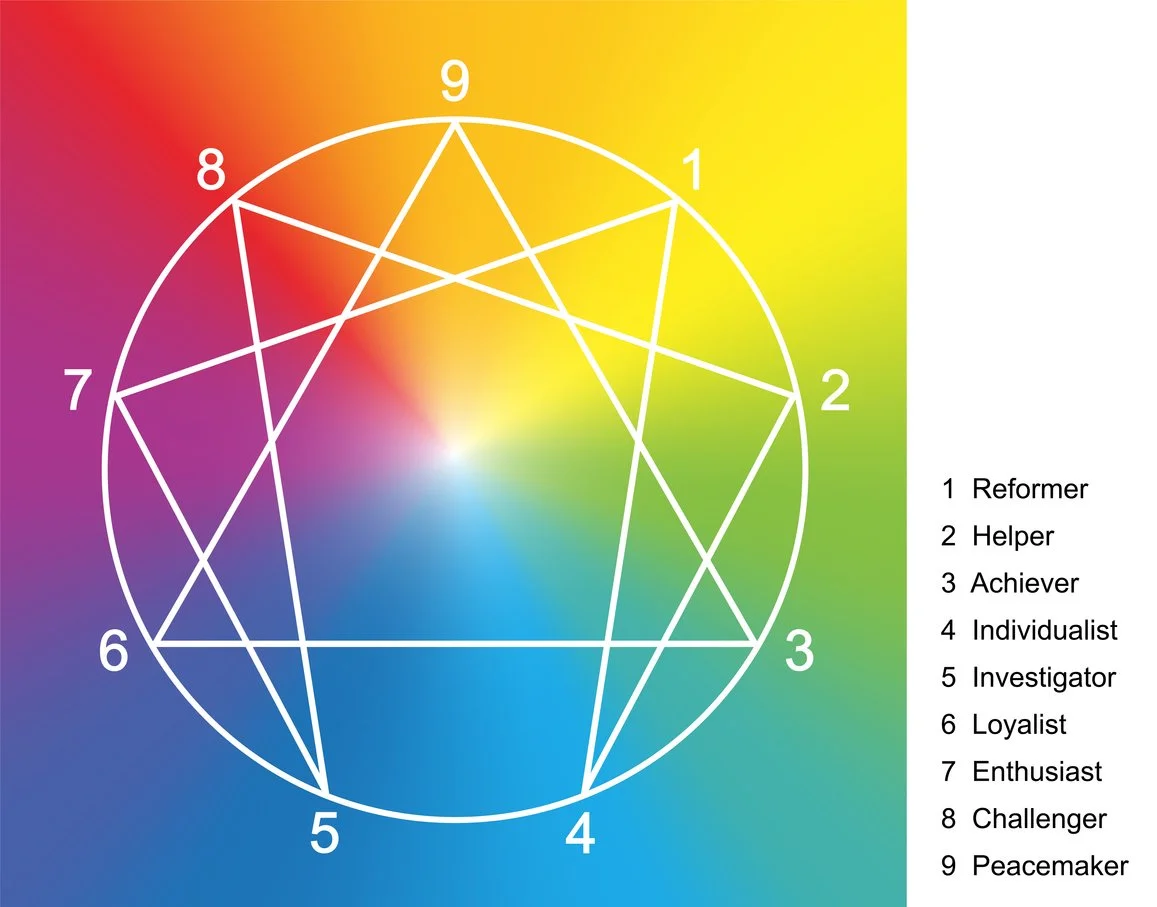
The Workplace: Retaining Individuals of Differing Enneagram Types
Curious about what motivates your team members? Some of these are obvious, and some not so obvious, which is a great reason to take the time to learn the Enneagram types, build your team, and keep them motivated and engaged.
I have written multiple articles (Feed | LinkedIn) on retention and why it is such a challenge to retain Gen Z. Upon diving into the Enneagram, I can see the differences in what each type brings to the workplace, and this applies to all generations based on their type, revealing gifts and challenges. Below are brief statements on what the Enneagram types require to support their retention.
INSTINCT TRIAD
Type 8 desires a workplace where they are given autonomy and spend minimal time in meetings, and where communications are direct and to the point. They desire positions of power – recommend coaching on their substantial impact on the group and how to moderate their intensity.
Type 9 desires a workplace where there is peacefulness and calm, their position is clearly spelled out for them, leadership recognizes their talents, they are given a role with structure and they can participate in defining their tasks, and they are on a team to shine with their gifts of being supportive, caring, attentive, and nonjudgemental.
Type 1 individuals desire a workplace with high ethical standards and a culture of continuous improvement, where well-defined processes and procedures (the rules of the road) are in place.
HEART TRIAD
Type 2 desires a workplace with an inclusive, relationship-oriented, and team-oriented culture, where leadership is personable and respects and values their unique gifts.
Type 3 desires a workplace with a competitive environment, a results-oriented approach, a project-focused focus, and a highly practical and efficient organization.
Type 4 individuals desire a workplace where there is an opportunity for distinctive and creative work, leadership recognizes their talents, and the organization values authenticity, allowing them to accomplish multiple tasks and positively impact the team with their compassion and understanding of others.
HEAD TRIAD
Type 5 desires a workplace where value is placed on knowledge, research, privacy, and autonomy. Be aware of their tendency not to be communicative.
Type 6 desires a workplace where they can feel secure in their job, with a focus on teamwork, a consistent environment, and the opportunity to receive direct feedback, allowing them to excel at troubleshooting.
Type 7 individuals desire a workplace where there is risk, multiple opportunities and options, their abilities are valued, and they can utilize their visionary talents.
And if you don’t know your Enneagram type, contact me at lesley@changingbehaviorsconsulting.com
The Enneagram and what it can do for your team
I have been an advocate since the late nineties. I truly love this system for getting to know myself better. The more I learn about the different types, the more I am awestruck as to how different we each are and the need to honor these differences - it is amazing to me that we get along at all!
The Enneagram will improve these five behaviors to form a strong team:
1. Value of Each Member - Acknowledge each member of the team – give back to them what you see as their strengths. Let them know that you see them reflecting their uniqueness. Every Enneagram type will respond positively to this approach.
2. Communication - Lay the mutually agreed-upon ground rules for communication. Listen fully to everyone’s comments. Do not cut them off or finish sentences for them.
3. Bonding and Feedback - Use the knowledge of the Enneagram types as a language to build bonds and to give feedback to each other.
a. Learning the Value of each of the Types (One, Two, Three, Four, Five, Six, Seven, Eight, Nine).
4. Tolerance - Take time, once everyone knows their type, to have a discussion on tolerance and what the knowledge of the Enneagram has given each type in terms of tolerance of each other.
5. Position Each Member According to Their Strengths.
Contact me for a free consultation to learn about:
· Learning the pairings of types
· The optimum placement of team members corresponding to different phases of the project
· How the type 1, 3, and 8 need can improve their leadership styles
· Taking advantage of the Instincts
Tension in the Workplace when Managers Operate in the Old Role
Management needs to adapt to the needs of Gen Z and Millennials. Here are some suggestions.
In the past, managers were:
· Divorced from the team
· In control of the agenda, planning, and meetings
· Held information close to the vest
· The source of direction, telling team members what to do
· Instrumental in promotions that were based on technical/functional knowledge and relationships
· Part of a closed system
· Hierarchical
· A believer in “do as you are told.”
Modern managers lead with:
· Greater self-awareness and more comprehensive training to raise the bar
· Generous coaching and mentoring with ongoing feedback to team members
· Flexibility, to meet and remediate the challenges of remote work
· Emotional Intelligence, empathy, and engagement
· Authentic leadership
· Paying attention to everyone, no cliques
· An environment where employees at all levels are heard
Anyone who wants to learn more about becoming a modern manager, drop me a note at lesley@changingbehaviorsconsulting.com
DEVELOPING SELF-AWARENESS
If you are a leader, self-awareness is in high demand today. Why? Because it makes you a more empathetic, grounded, and authentic person, and the younger generations are clamoring for more of these qualities. If you are not a leader, it will make you a better person and raise your Emotional Intelligence. So, give it a try and turn to the Enneagram for some clarity where you will learn about your inner motivations, your inner critic, slowing down your thinking and reactions, and harmonizing your inner and outer states.
FOUR TIPS FOR DEVELOPING SELF-AWARENESS
Projection – Think about a time when you had a strong dislike for someone. You may think of them as being narcissistic, self-centered, arrogant, judgmental – to name a few. If your reaction to them is strong, then take a look inside yourself. We project onto others parts of ourselves that we have denied or find it too painful to look at and you can learn that those undesirable qualities belong to you.
Thinking Other – Thinking Other is critical to self-awareness, as it involves taking a few seconds or minutes to consider how the other person will perceive our words or information. Is the timing right? Are the words right? Is it important? Will feelings be hurt? Is it constructive? It helps to check in with the other person too.
Inner Critic – Words never stop in our minds unless we are asleep. What are those words saying? You might be planning, sorting out a problem, making decisions, and you may also be hearing from your inner critic, criticizing your actions. The Inner Critic can help with discernment, but it can also attack us by criticizing every little thing we do or don’t do and belittling our actions and thoughts. Most of it is not constructive and reap the benefits of becoming more aware of it and rein it in.
Inner State versus Outer State – Have you ever noticed your inner state (what is going on in your heart, head, and body) differs from your outer state? I may be feeling anxious and annoyed inside but have a big smile on my face on the outside. Have you ever wondered about these differences? Why I can feel so differently inside from my behavior outside? If you understand your motivations, you will have more integration between the two states and be integrated, which will cause you to be more authentic. It won’t happen overnight, but the Enneagram can help you integrate the inner and outer states.
+++++++++++++++
I am certified in the Enneagram. It is a personality system unlike any you have experienced. It involves an interview/test, self-reflection, and self-awareness.
++++++++++++++++
Young Professionals (Gen Z and young Millennials) are revolutionizing the workforce and business cultures. They demand greater leadership skills, such as empathy and authenticity, and desire meaningful work that helps them grow. The Enneagram is a way to jumpstart your culture to one of more tolerance, respect, engagement, and productivity.
Contact
➤ LOCATION
Marblehead, Massachusetts 01945
☎ CONTACT
Lesley@changingbehaviorsconsulting.com
(781)929-6901
““Everyone talks about building a relationship with your customer. I think you build one with your employees first.””
Let's Chat.
Find out more about Gen Z and the Enneagram.
Understand the behaviors of Gen Z and Millennials and learn how to overcome their weaknesses and capitalize on their strengths!
Let’s chat. I can help you retain these young professionals who are critical to your bottom line, and improve team performance across the generations.
